Dogniversity Hong Kong review: force-free private dog training examined
Independent review of Dogniversity's Hong Kong and online dog training, including methods, published credentials, service gaps, fit and welfare questions.
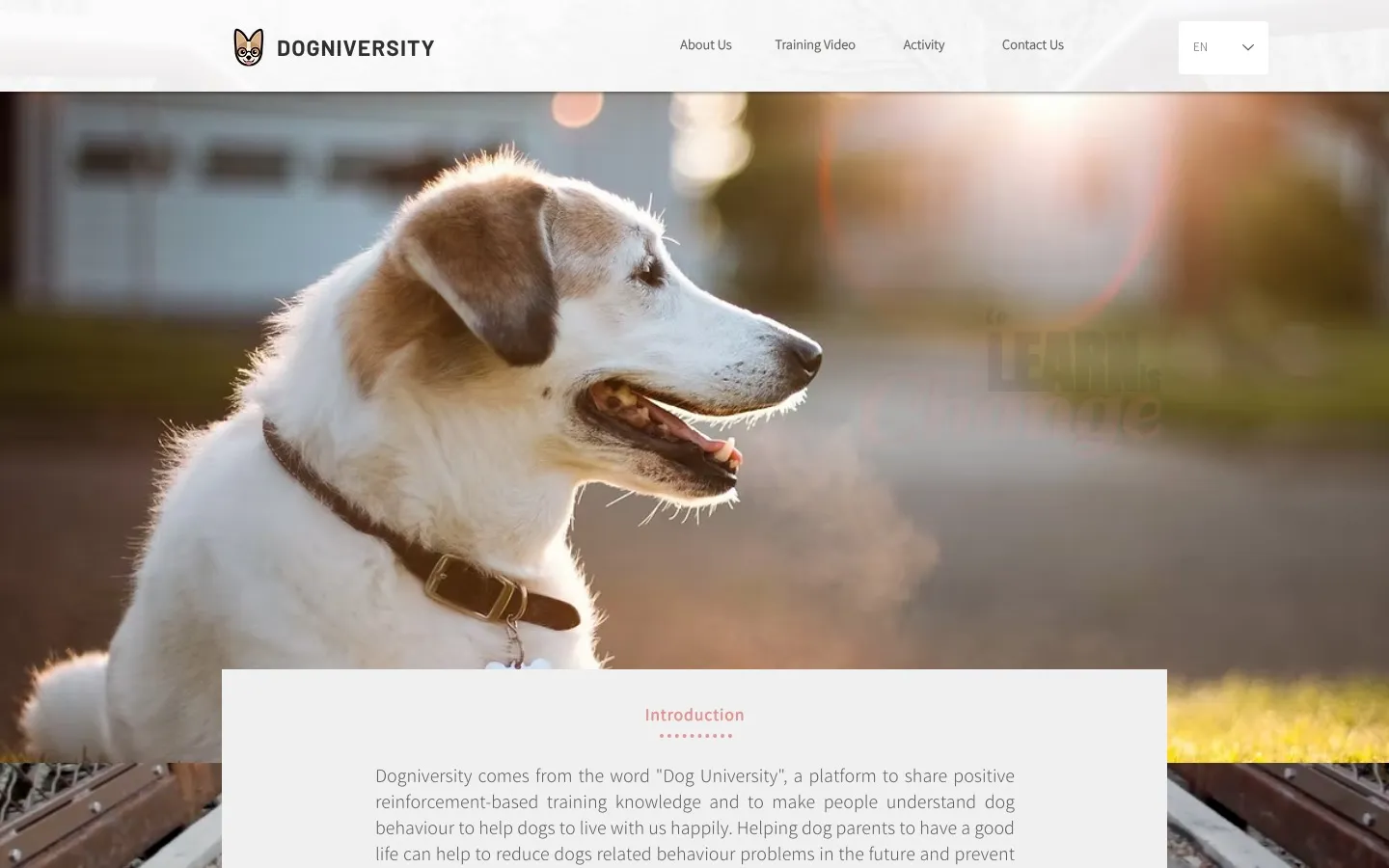
Quick verdict
Dogniversity stands out for publishing a force-free position plus named, independently checkable trainer credentials. Founder Eurica lists Karen Pryor Academy Certified Training Partner (KPA-CTP) and Certified Professional Dog Trainer–Knowledge Assessed (CPDT-KA), and the service focuses on individual behaviour consultation at home or online. That is a promising match for Hong Kong dogs whose difficulty is tied to lifts, corridor noise, visitors, bicycles or a particular walking route.
The main weakness is commercial transparency: the official page checked on 11 August 2026 did not publish current fees, package length, travel zones, cancellation terms or response times. Shortlist Dogniversity for method and credential signals, but request a detailed written proposal before paying. Compare alternatives in our Hong Kong dog-training guide.
Scope and disclosure
DogDogHK reviewed the provider’s public pages on 11 August 2026; no compensation was received. Qualifications and experience are provider claims unless linked to an awarding body, and selected testimonials are not measured evidence of general outcomes.
We use the AVSAB humane-training position as a baseline: reward-based methods, not electronic/prong/choke collars, leash corrections, intimidation or deliberate flooding. Medical causes must be ruled out by a Hong Kong registered vet when behaviour changes suddenly or involves pain, neurological signs or severe anxiety.
Background, format and offering
Dogniversity describes its purpose as sharing behaviour and training knowledge to improve daily life and reduce surrender caused by behaviour problems. The site offers behavioural training/consultation by email, phone, video meeting or face-to-face enquiry, with home and online consultation available. It also provides courses and talks for organisations and groups.
The published problem examples are specific: shyness, over-excitement, aggression, pulling, scavenging and sensitivity to sounds or people. The stated approach is to assess each dog’s temperament and reactions, change the emotional and environmental picture, and guide voluntary learning rather than suppress behaviour through coercion.
Private home work can observe the actual trigger chain: the doorbell, narrow lobby, delivery trolley, feeding area or street corner. Online consultation can suit owners outside the travel area or dogs distressed by visitors, but video angle and coaching skill matter. Neither format guarantees improvement; owners must practise between sessions.
Credentials: useful, but verify current status
The official page lists:
- Karen Pryor Academy Certified Training Partner;
- CCPDT Certified Professional Dog Trainer–Knowledge Assessed (CPDT-KA);
- Family Paws Parent Education family educator;
- instructor roles connected with AFCD courses, ERB training and Hong Kong Dog Rescue.
KPA-CTP and CPDT-KA are more meaningful than an unregulated title such as “master trainer” because they name external organisations and can be checked. They are training credentials, not medical licences or proof of a veterinary behaviour specialty. Confirm active status in the relevant directories and ask what continuing education applies to your case.
Price, booking and policies
No current public price table, deposit rule, cancellation window, travel surcharge or package validity was visible on the official page when checked. That is the central watch-out. Before booking, request:
- initial-assessment length, location and price;
- expected follow-up format without an outcome guarantee;
- travel/online fees, expiry, cancellation and rescheduling terms;
- who delivers every session and whether support messages are included;
- referral and emergency procedure for bites, panic or suspected pain.
Send short videos only when it is safe to record naturally. Never stage a dog closer to a trigger to “show” the reaction.
Hong Kong fit
The combination of home and online delivery fits dense Hong Kong living. A plan can be designed around lift timing, sight lines, building rules and quieter routes rather than a demonstration in a neutral training hall. Online follow-up may also reduce travel for dogs who cannot tolerate taxis or public exposure.
Yet home-based work needs consent from household members and building management where relevant. Tell the trainer about elderly relatives, children, helpers, other pets and narrow escape routes. For a bite-risk dog, ask for a written door/visitor protocol before the trainer arrives.
Strengths
- Clear force-free, positive-reinforcement position.
- Two named, independently verifiable professional credentials.
- Home and online consultation options.
- Provider explains individualised behaviour rather than one-size commands.
- Published experience with rescue-related education and group talks.
Watch-outs
- No public current fee or cancellation table.
- Service area, language availability and package structure need confirmation.
- Credential initials do not guarantee fit for every aggression or separation case.
- Website testimonials are selected by the provider and cannot establish an average success rate.
Best for — and who should look elsewhere
Best for: fearful, noise-sensitive, over-aroused or reactive dogs; rescue families wanting coaching in the real environment; owners committed to reward-based homework; and people needing an online option.
Look elsewhere or add veterinary care: urgent medical signs, severe self-injury, active bite risk without a safety plan, or owners who want boarding-based training with no involvement. If you need a low-cost fixed group class with published dates, SPCA may be easier to budget.
Preparation and welfare questions
Write three observable goals and a one-week log of trigger, distance, response and recovery. Gather medical records, current equipment and a floor/route sketch. Ask what happens when food is refused, whether aversive equipment is ever used, how progress is measured, and when the trainer refers to a vet. Agree on a management plan before attempting behaviour change.
Stop if anyone asks you to provoke aggression, punish warning growls, use pain/fear, guarantee a cure, or withhold veterinary assessment. Warning signals are safety information; suppressing them can make risk harder to read.
Editorial verdict
Dogniversity has one of the stronger published method-and-credential profiles in this Hong Kong shortlist. Its value proposition is not flashy commands but owner coaching around the dog’s actual emotional response. We would be comfortable shortlisting it, subject to credential verification and a written quote. The lack of public commercial terms prevents a stronger value judgment.
FAQ
Does Dogniversity offer online sessions?
Yes. Its official page states that home and online consultation are available.
Are fees published?
Not on the official page we checked. Ask for an itemised quote and policy terms.
Is CPDT-KA a veterinary behaviour qualification?
No. It is a professional dog-trainer credential. Diagnosis and medication belong to registered veterinarians.
Can online training help reactivity?
It can coach management and read recorded/natural behaviour without adding a visitor, but suitability depends on risk and video quality. Never manufacture a reaction for the camera.