How we rank dog food
These are buying-evidence tiers, not a ranking of clinical outcomes. A checked recipe’s complete-food statement, analysis, formulation and quality-control documentation determine the brand’s starting position. Other recipes can differ; therapeutic diets are not ranked against everyday adult food.
- Natural or synthetic? Look at the purpose.
- Natural does not mean nutritionally complete. Added vitamins and minerals can be necessary to balance a recipe. Grain, meal and by-product names alone do not establish quality. We describe preservatives, colours and flavour sources individually.
- MSG: not listed is not a laboratory result.
- We identify added MSG only where a label declares monosodium glutamate, E621 or its equivalent. Yeast extract, hydrolysed protein and meat can supply glutamate; they do not establish that MSG itself is declared, or that food is glutamate-free. Incomplete labels stay unverified.
- Compare composition on the same basis.
- As-fed percentages include water, so wet food and kibble cannot be compared directly. Estimated dry matter = declared percentage ÷ (100 − moisture %) × 100. Guaranteed minima and maxima are not measured averages; higher protein is not automatically a better fit.
- Owner reviews describe experience, not long-term health.
- We separate appetite, stool, packaging and delivery comments from nutrition evidence. Store ratings are not product ratings; unavailable product reviews are labelled plainly. DogDogHK has not conducted feeding trials or laboratory tests.
For puppies, large-breed growth or dogs with medical conditions, check the appropriate life-stage statement and veterinary advice rather than switching on a brand tier alone.
WSAVA nutrition guidelines · AAFCO pet-food labels · FDA MSG ingredient explainer (human food; not a canine safety conclusion)
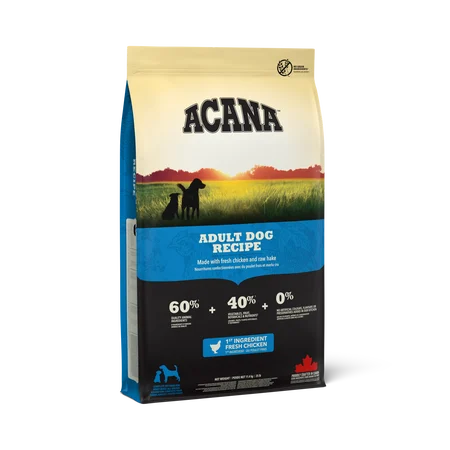 ACANADry